Parasite testing has always been a core part of large animal veterinary practice, but the tools available to vets have changed dramatically. Sending samples to an external laboratory was once the only reliable option. Today, Micron Kit delivers laboratory-quality faecal egg count results in minutes, at the point of care, with no specialist training required. This post explains how it works, how it compares, and why practices across Ireland, the UK, the United States, Australia, and New Zealand are making the switch.
What Micron Kit Does
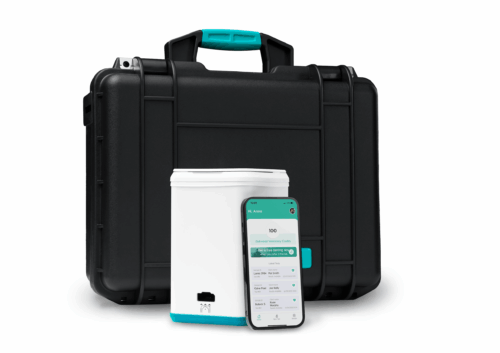
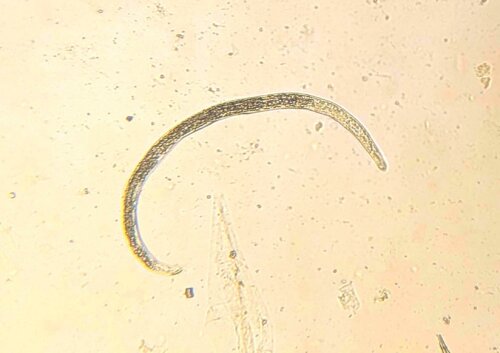
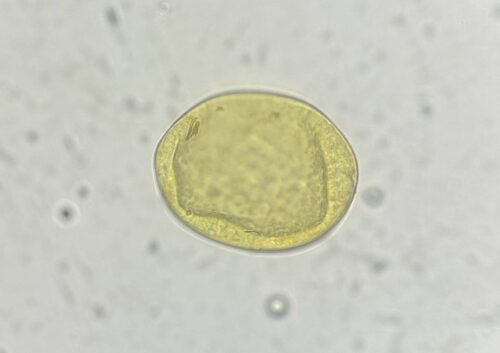
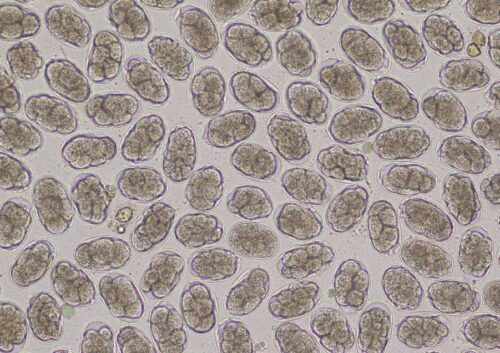
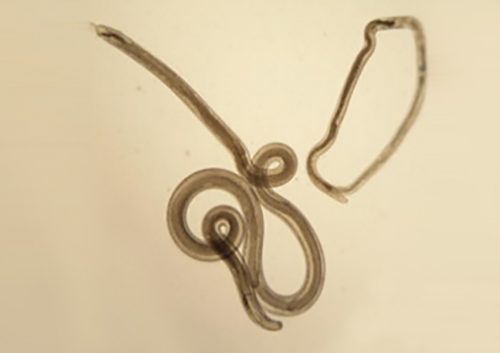
Micron Kit is an AI-powered, point-of-care parasite diagnostic system designed for veterinary practices and animal health professionals. It covers large animals (cattle, sheep, horses, and goats) and companion animals, and it tests for the full range of clinically significant parasites: Strongyles, Nematodirus, Strongyloides, Moniezia (in ruminant), Anoplocephala (in horses), Coccidia, Trichuris, and both liver and rumen fluke.
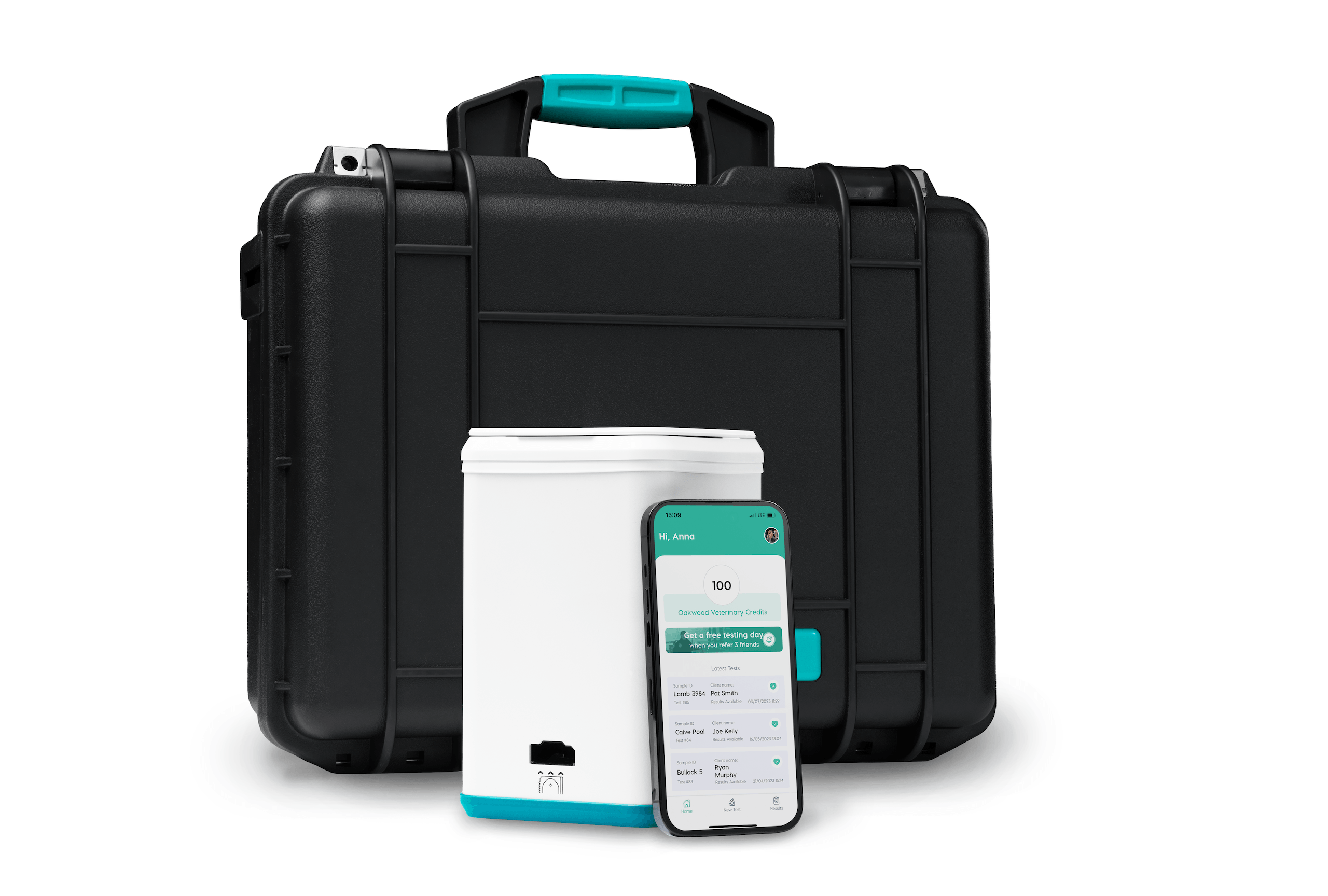
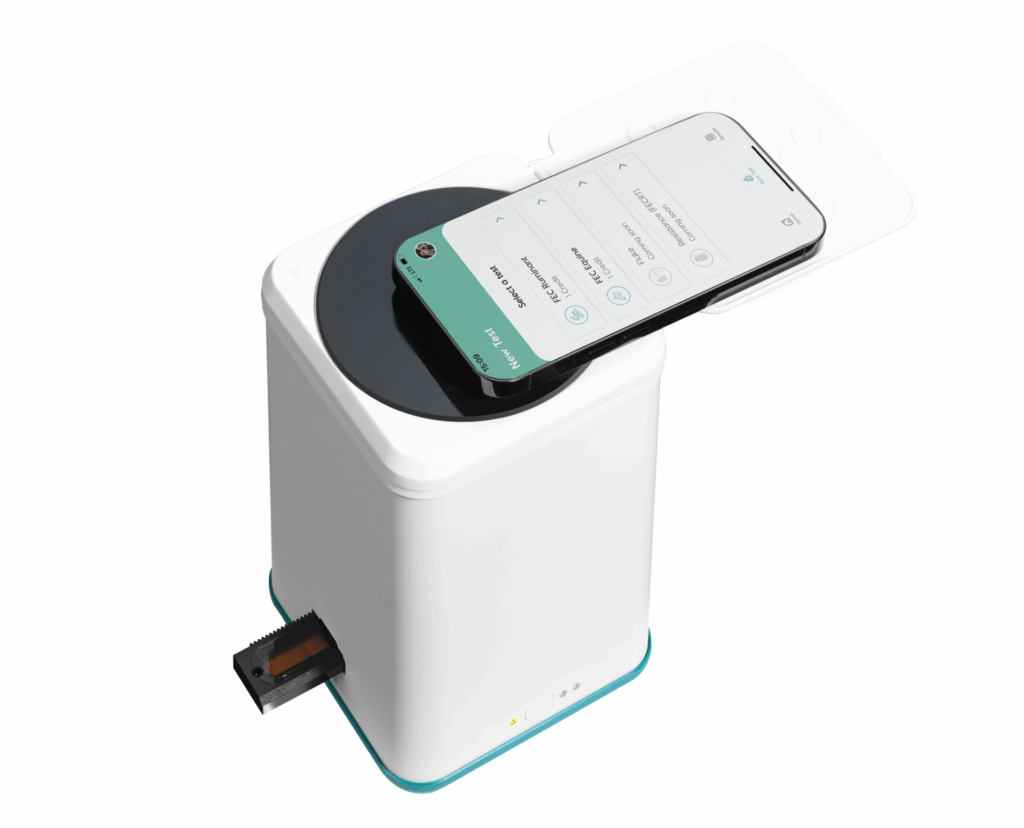
Sample preparation takes under five minutes and can be carried out by any member of practice staff. Scan time for the worm test slide is under four minutes. Most practices receive a result in under 10 minutes from start to finish, on a smartphone or desktop, with no laboratory required.
Up to 15 slides can be processed through a single Micron unit per hour, making it the highest-throughput point-of-care FEC system currently on the market. For practices handling high test volumes, whether driven by client demand, a practice-wide anthelmintic stewardship programme, or scheme-based testing requirements, that throughput capacity matters.
Why the Method Matters: Centrifugal Flotation vs Passive Flotation
Not all FEC kits use the same extraction method, and the difference is not trivial.
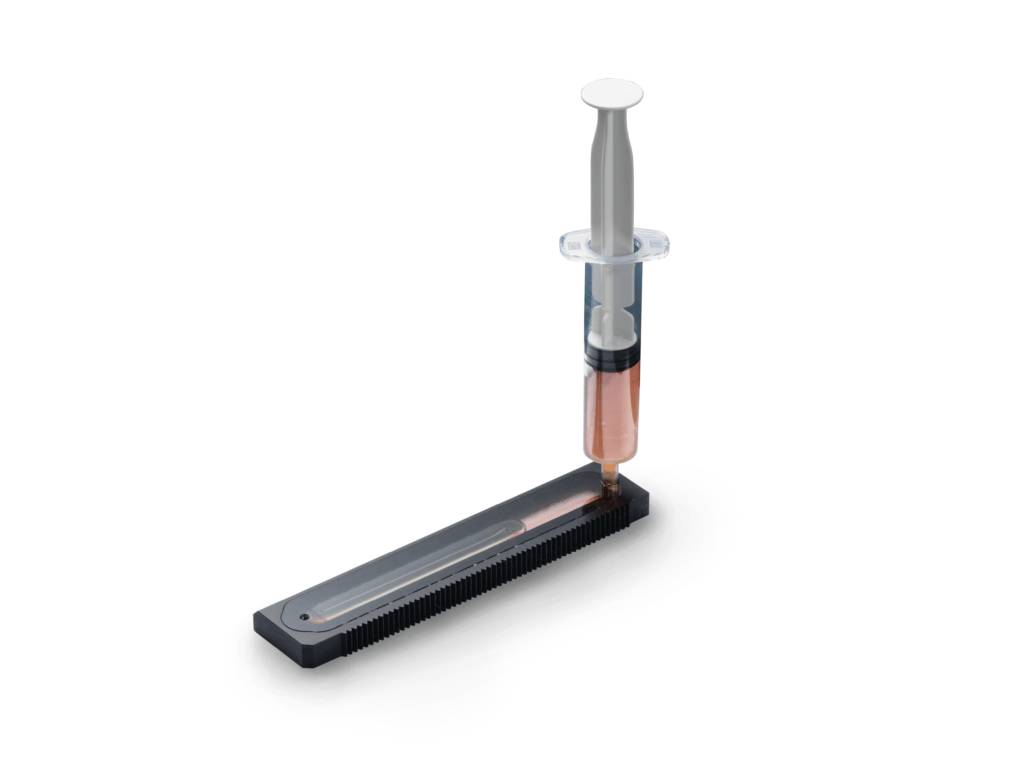
Micron Kit is built on centrifugal flotation for both its large animal and small animal worm tests. Centrifugal flotation is the gold-standard method for maximising parasite egg recovery. The centrifugal force drives eggs to the flotation surface efficiently and consistently, producing a reliable egg count even at low burdens.
Several competing systems use passive flotation, where eggs are left to rise to the surface over time by gravity alone. Passive flotation is well established in field conditions, but it is less sensitive at low egg counts and more vulnerable to variability in technique and timing. For clinical decision-making, particularly when running a faecal egg count reduction test (FECRT) to assess anthelmintic efficacy, sensitivity at low egg counts is exactly what you need.
Accuracy You Can Verify: VetQAS Proficiency Testing
Accuracy claims are common in veterinary diagnostics. What makes Micron Kit different is that its accuracy is independently checked, publicly, through an accredited proficiency testing scheme.
Micron Kit is proficiency tested through VetQAS, the APHA-run proficiency testing service that operates to ISO/IEC 17043 standard. It participates in two specific schemes: PT0114 for worm egg count (three rounds per year) and PT0177 for fluke egg count. In these blind proficiency tests, Micron Kit z-scores are consistently closer to the consensus value than many accredited veterinary laboratories. That is not a marketing claim; it is a statistic from an independent body that any client can examine.
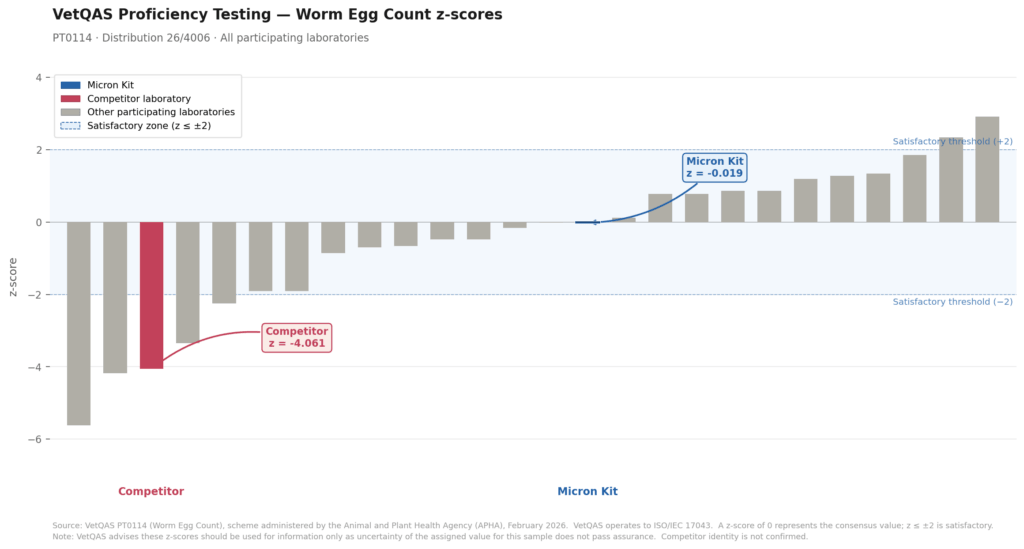
This proficiency testing record also provides a robust defence in clinical documentation scenarios, important when practices are issuing treatment recommendations on the basis of in-house results.
What the Peer-Reviewed Evidence Shows
Beyond proficiency testing, Micron Kit has been validated in independent peer-reviewed research.
A peer-reviewed study by Micron’s veterinary team, published in Veterinary Parasitology (Bucki et al., 2023), compared Micron Kit directly against an accredited laboratory reference method on ovine faecal samples, finding Micron Kit non-inferior and returning higher egg counts than McMaster – consistent with the greater sensitivity of centrifugal flotation.
A 2024 comparative study (McEvoy et al., Vet Parasitol, 2024) directly compared the repeatability of Micron Kit, McMaster, FECPAKG2, and OvaCyte. The findings are worth understanding clearly: Micron and McMaster showed similar repeatability with one another. FECPAKG2 and OvaCyte were found to be less repeatable (precise) than McMaster. For a practice making anthelmintic prescribing decisions, repeatability is not a secondary concern; it is the clinical bedrock of a valid result.
Micron Kit has been used to test hundreds of thousands of animals across multiple countries, providing a substantial real-world evidence base alongside the formal research record.
The Full Micron Ecosystem: Three Integrated Components
Micron Kit is not a standalone device. It operates as part of a three-component system designed to eliminate the friction points that cause in-house testing programmes to stall.
Micron ID
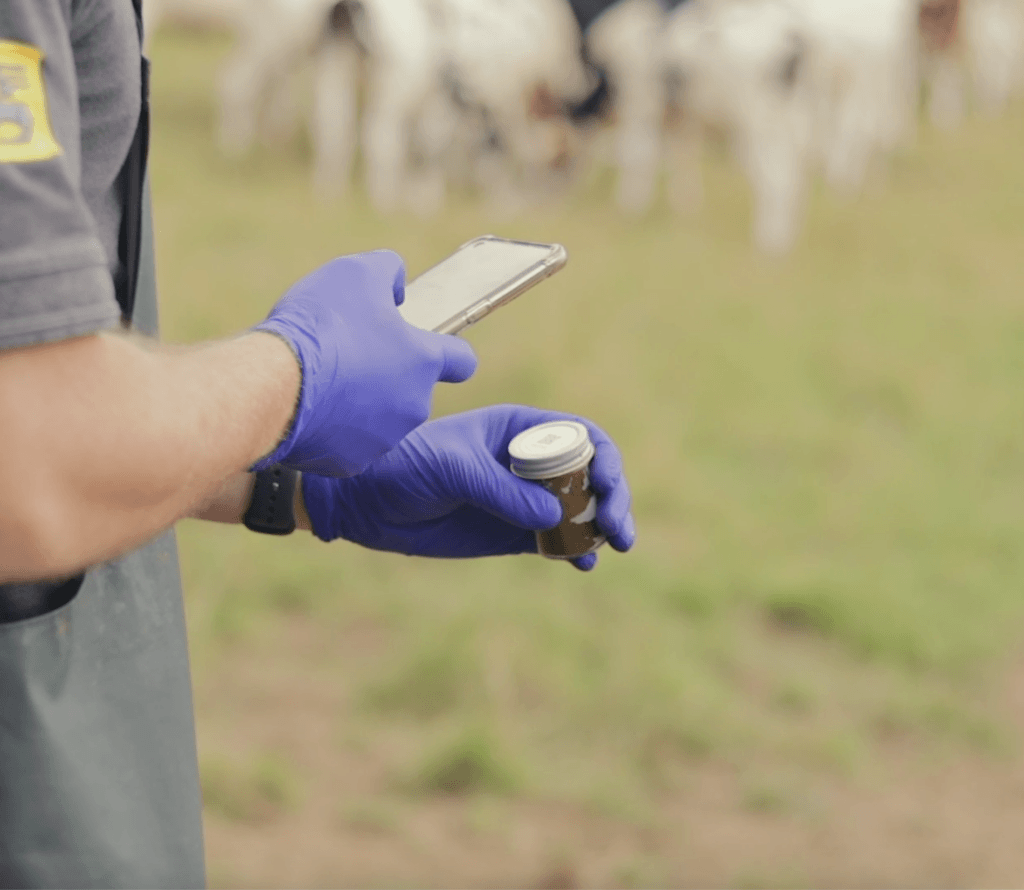
Micron ID is a QR-coded identification system that allows animal owners to input sample details at source, on the farm or in their yard, using a smartphone. When the sample arrives at the practice, the QR sticker is scanned to instantly start the test, linking patient data automatically. There is no manual data entry. Transcription errors, one of the most common sources of clinical documentation mistakes in busy practices, are eliminated at source.
Micron Kit (Core Hardware)
The testing unit itself contains everything needed to prepare and analyse the sample. One deliberate design decision sets Micron Kit apart from its competitors: the slides are fully reusable. Competing systems rely on single-use disposable cassettes, which generate significant plastic waste and require practices to maintain large consumable stocks. Micron chose reusable slides from the outset, not as a retrofit sustainability claim, but as a core engineering principle. Practices using Micron Kit do not need a back storeroom full of plastic cassettes.
Micron Analytics
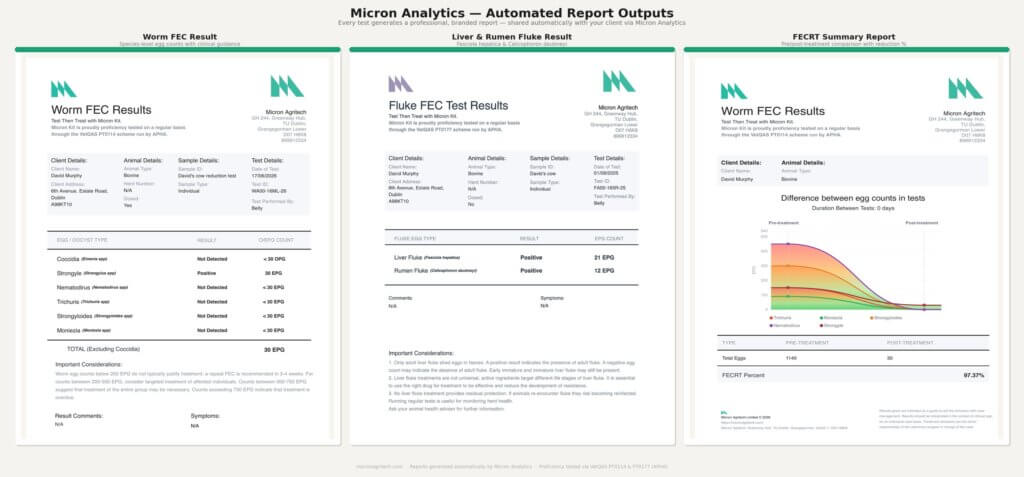
Micron Analytics is the digital platform that sits behind every test run. When a test is complete, the system automatically generates a professional, branded report that can be shared with the client automatically or held for manual review. Users can add dynamic comments to reports, customising the clinical message for each case.
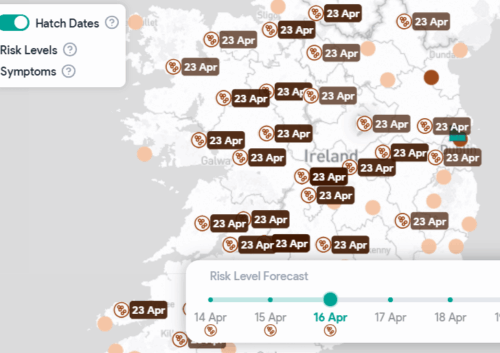
The analytics layer surfaces parasite burden trends at the individual animal level, the client (farm) level, and across the broader practice population. For practices running structured anthelmintic stewardship programmes, this population-level visibility transforms what in-house testing can actually deliver.
Coming soon: full FECRT functionality within Micron Analytics. Practices will be able to run a pre-treatment faecal egg count, log the treatment administered, and receive an automatic reminder when the post-treatment test is due. At the end of the process, Micron Analytics produces a complete branded professional report including results, reduction percentages, and graphs. Running a statistically robust FECRT, currently one of the more logistically demanding tasks in veterinary parasitology, will become a routine, well-documented part of practice workflow.
Comparing Your Options: In-House Micron Kit vs External Lab vs Competitors
The decision to bring FEC testing in-house usually comes down to four factors: turnaround time, accuracy, cost per test at volume, and staff time. External laboratory testing remains a valid option for low-volume practices with no particular urgency on result timing. For practices where same-day results change treatment decisions, where volume is growing, or where anthelmintic stewardship is a strategic priority, in-house testing with Micron Kit competes strongly on all four.
On the competitor question, the 2024 McEvoy et al. study provides the most useful independent frame of reference. Our competitors are established products with real user bases; the relevant question is not whether they work, but whether their results are as repeatable as the method they are intended to replace. The published evidence suggests they are not. Micron Kit and McMaster performed comparably on repeatability. If a practice is moving away from McMaster specifically to gain in-house capability, that like-for-like repeatability matters.
Why This Matters Right Now: Scheme-Driven Demand in Ireland and Anthelmintic Resistance in New Zealand and Australia
Ireland: TASAH 2026
The Targeted Advisory Service for Animal Health (TASAH) launched in June 2026 with 26,000 farm visits across Ireland, with faecal egg count built into the scheme as a core diagnostic activity. For practices operating in Ireland, this represents a step-change in the volume of FEC testing expected from farm vets within a structured advisory visit. Practices that have brought FEC testing in-house with Micron Kit are materially better placed to deliver on this demand efficiently, with same-day results and automatic client reporting.
New Zealand and Australia: The Anthelmintic Resistance Context
Anthelmintic resistance in small ruminants and horses is not an emerging concern in New Zealand and Australia; it is an established, well-documented reality. In this context, the FECRT is not an occasional clinical tool; it is a routine practice requirement for any responsible anthelmintic prescribing programme. The ability to run a high-throughput, repeatable, centrifugal flotation-based FECRT in-house, with automatic pre- and post-treatment result tracking built into the Micron Analytics platform, is particularly relevant for practices managing sheep and horse clients in both countries.
Support That Comes With the Kit
Every Micron Kit purchase includes a dedicated account manager, live in-app chat, a call-back function, and in-person training. The system is designed to get a practice running quickly, and the support structure exists to ensure it stays running well.
Book a Demo
If you are evaluating in-house FEC testing options for your practice, the best next step is to see Micron Kit running on a real sample.
👉 Book a complimentary demonstration at a time convenient to you: Get in touch with our team.
Une note pour nos partenaires francophones
Micron Kit est disponible en France et en Belgique par l’intermédiaire de Dopharma, notre distributeur agréé pour ces marchés. Si vous souhaitez en savoir plus sur le système, ses performances cliniques, ou les modalités de commande, contactez l’équipe Dopharma directement ou visitez le site Micron Agritech pour plus d’informations. Nous sommes ravis d’accompagner les pratiques vétérinaires francophones dans la mise en place de diagnostics parasitaires de haute précision au point de soins.